How Private Jet CO₂ Emissions Are Reduced & Which Aircraft Are Best for Lower‑Carbon Travel
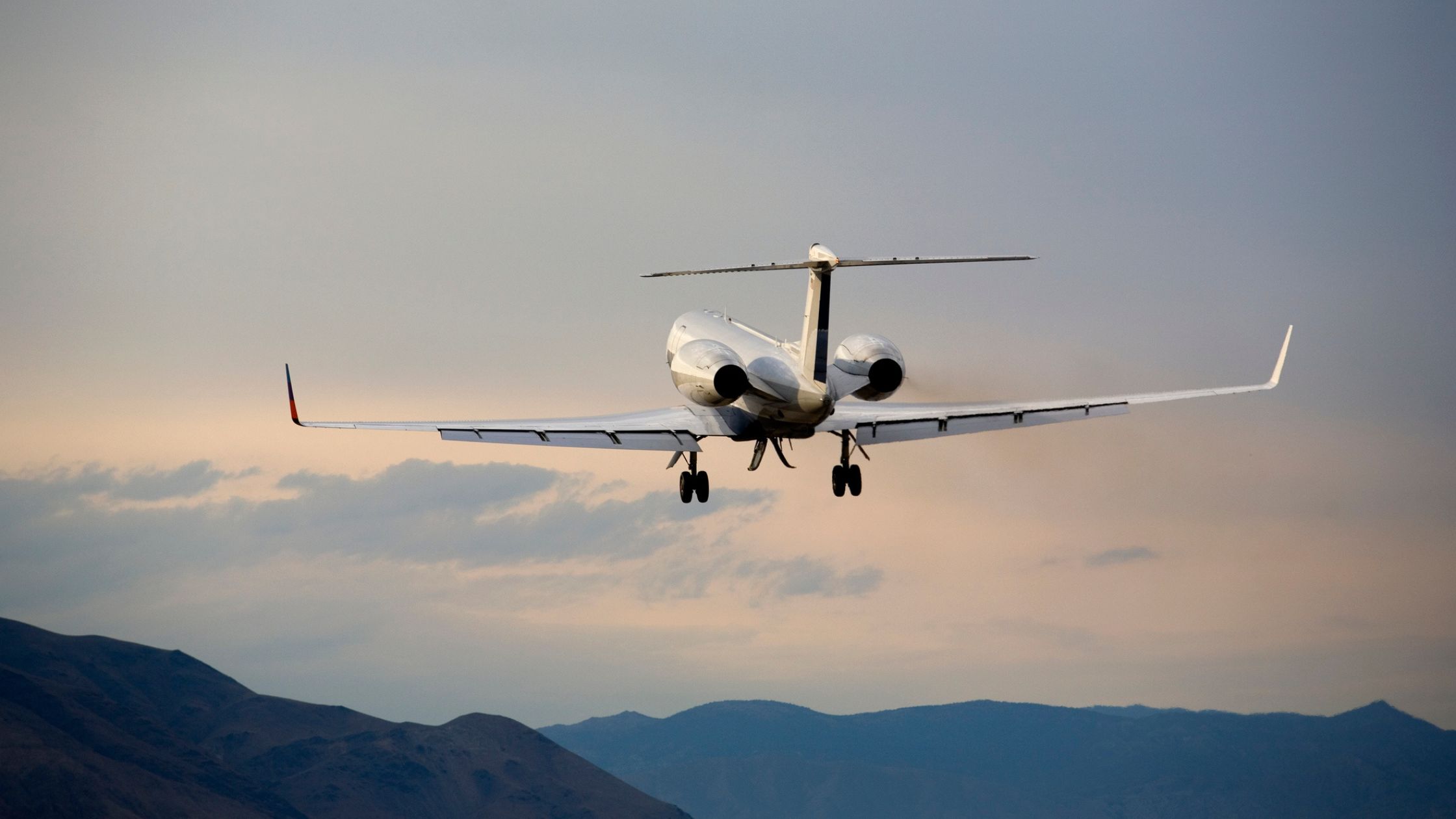
Private jet CO₂ emissions come down to one number – how many gallons of fuel the aircraft burns on your trip. According to the US Energy Information Administration, every gallon of Jet A produces about 9.75 kg (21.5 lbs) of CO₂, while avgas releases about 8.31 kg (18.3 lbs). A flight’s footprint is driven by several factors you can actually control, including which aircraft you charter, how far it flies, how much of the trip it flies empty, and what’s in the fuel tank. By selecting an appropriate aircraft, you can reduce your environmental footprint by 40% to 70% without sacrificing travel speed and comfort.
The Arithmetic behind a Charter Flight’s Carbon Footprint
The calculation itself is straightforward. Knowing how it works makes it easier to understand where an emissions estimate comes from and whether it looks reasonable:
Trip CO₂ (metric tons) = fuel burn (gal/hr) × block hours × 9.75 ÷ 1,000
Block hours run from engine start to engine shutdown, it’s not just about the time spent in cruise. Taxi, climb, hold, and descent all count, and the climb phase typically requires the most fuel. That’s why two 400-nautical-mile hops burn considerably more than one 800-mile leg: you pay the climb penalty twice.
Let’s run the numbers on a real aircraft. According to Conklin & de Decker/JSSI, a Citation CJ3+ burns roughly 148 gallons per hour. A two-and-a-half-hour flight puts about 370 gallons through the engines – call it 3.6 metric tons of CO₂. Swap to a Challenger 650 for the same trip at 329 gallons per hour, and you’re at 8 metric tons. It’s more than double for a cabin many four-passenger missions don’t need.
What Drives Private Jet Flight Footprints?
- Aircraft type and size: heavy and ultra-long-range jets require massive thrust to launch and maintain cruise speeds, consuming between 380 and 500+ gallons of Jet A per hour. Light jets burn between 130 and 230 gallons per hour, while turboprops can operate on as little as 76 gallons. Age also matters, since newer jets with high-bypass engines consume less fuel.
- Mission fit: chartering a 4,000-mile jet for a 600-mile trip means hauling a heavy airframe and engines the whole way. The aircraft doesn’t get more efficient because you use it for a short distance. Quite the opposite. It gets less efficient because a larger share of the trip is spent in climb. Pushing a light jet onto a coast-to-coast route isn’t a greener solution either. The aircraft will need a fuel stop, adding a second climb cycle and 20-40 minutes of extra block time.
- Repositioning: when an aircraft isn’t based at your place of departure, someone has to fly it there empty. An empty leg burns fuel at the same rate as a leg with you on board. So, if a two-hour flight requires a two-hour relocation, your footprint doubles. Industry estimates show that repositioning covers approximately 30-40% of business jet movements in North America, although the figure varies by operator and season.
- Passenger count vs. capacity: total fuel burn tells you how much the aircraft emits overall, but this number changes when you look at carbon footprint per passenger. Flying a heavy jet with only two people on board means those emissions are spread between just two travelers.
- Fuel type: many private jets still rely on Jet A, which adds a substantial amount of greenhouse gases to the atmosphere. SAF can reduce the flight’s lifecycle emissions, but it currently makes up less than 1% of global aviation fuel use.
How Can Private Jet CO₂ Emissions Be Reduced?
Sustainable Aviation Fuel
SAF is an eco-friendly alternative to conventional aviation fuel. It can be produced from a wide range of sustainably sourced materials, including used cooking oil, renewable energy, and biomass residues. SAF doesn’t eliminate CO₂ from the aircraft engine but can reduce lifecycle greenhouse-gas emissions by around 80%. As a safe drop-in fuel, it’s certified for blends up to 50% under ASTM D7566.
The problem is availability. IATA projects global SAF production to reach about 2.4 million tons in 2026, which is only 0.8% of total jet fuel consumption. You should always ask in advance whether SAF is available for your itinerary.
Trip Planning and Empty Legs
Single-day round trips are usually better than two one-ways, as the aircraft stays with you instead of repositioning twice. Booking an empty leg is another good option to reduce your environmental footprint. Besides being the cleanest way to fly privately, empty leg charters are also much more affordable. Mercury Jets provide multiple travel options at a discount of up to 75%.
Choosing an Aircraft that Fits Your Itinerary
This is the best decision for an eco-conscious private jet traveler. Switching from a super midsize to a light aircraft on a two-hour trip with four passengers saves approximately 3 metric tons of CO₂. That’s more than most travelers offset in a year. But the objective is not simply to choose the smallest jet available. It’s about selecting the right-sized aircraft based on your mission.
Aircraft Comparison: Which Is Best for Lower‑Emission Private Travel?
Aircraft Category | Seats | Fuel Burn (gal/hr) | CO₂ per Hour (metric tons) | CO₂ on a 2-Hour Flight | Best for |
| Pistons | 2-6 | 15-45 (avgas) | 0.1-0.4 | 0.2-0.7 t | Short hops under ~500 miles where speed isn’t the priority |
| Turboprops | 4-8 | 76-136 | 0.7-1.3 | 1.5-2.7 t | Trips under ~600 miles, short or unpaved runways, mountain airports |
| Light & Very Light Jets | 4-8 | 76-229 | 0.7-2.2 | 1.5-4.5 t | Regional missions up to ~1,500 miles |
| Midsize Jets | 7-9 | 198-298 | 1.9-2.9 | 3.9-5.8 t | Longer flights of 1,500-2,500 miles, or groups that are too large for a light jet |
| Super Midsize Jets | 8-10 | 228-400 | 2.2-3.9 | 4.4-7.8 t | US transcontinental nonstop flights with 6-8 passengers |
| Heavy Jets | 10-16 | 284-540 | 2.8-5.3 | 5.5-10.5 t | Long domestic and shorter international trips, larger groups |
| Ultra Long Range Jets | 12-19 | 438-528 | 4.3-5.1 | 8.5-10.3 t | Transoceanic nonstop charters |
*Actual fuel burn may vary by 5-15% based on PDA, rerouting, winds, and alternative fuel blends.
Turboprops, light, and very light jets are a great option for most eco-conscious travelers flying domestic or regional routes. They produce the lowest CO₂ emissions while still providing the speed and flexibility of private aviation. Super-midsize and larger aircraft remain appropriate when the itinerary actually requires their range or cabin volume.
How to Choose a Private Jet Charter for Lower‑Carbon Travel
Here are the most useful questions to ask before booking a private jet charter:
- Is a newer, more fuel-efficient aircraft available?
- What aircraft category is actually required for the route?
- Can a smaller aircraft handle the route without compromising safety or operational requirements?
- Where is the aircraft based?
- Is SAF available for a specific route?
How Mercury Jets Supports Sustainable Travel Decisions
No charter flight is low-carbon in absolute terms, and we won’t pretend otherwise. The real choice is between two versions of the same trip – one that burns 3 tons of fuel and one that burns 8. The decision is made at the point of aircraft selection, and here’s when MercuryJets.com comes in.
We help travelers minimize their environmental footprint without sacrificing the core benefits of private aviation. By leveraging a global network of accredited operators, our specialists can source the most fuel-efficient, locally based aircraft and check what SAF options are available for the trip.
Contact Mercury Jets for a personalized quote tailored to your route, schedule, and passenger needs. Our support service is available 24/7.